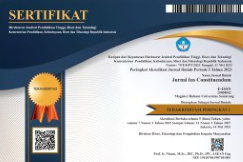
Ownership and Management Information
Journal Ius Constituendum (JIC) is a scholarly journal committed to the publication and dissemination of original research in the field of law. The journal's ownership and management arrangements support the implementation of its academic mission and the maintenance of responsible scholarly publishing practices.
1. Journal Ownership and Institutional Support
Journal Ius Constituendum (JIC) operates within an institutional publishing framework that supports the development of legal scholarship, research dissemination, and academic communication. Its institutional ownership and support arrangements provide the organizational foundation for the journal's publishing activities.
The journal's ownership and institutional support are distinct from its editorial decision-making process. Institutional support is intended to facilitate the journal's operations while preserving the integrity and independence of editorial evaluation.
2. Journal Management and Editorial Structure
Journal Ius Constituendum is managed through an editorial structure responsible for overseeing the manuscript submission and publication process. Depending on their assigned roles, the editorial team may include an Editor-in-Chief, managing editors, editorial board members, section editors, peer reviewers, and other personnel supporting editorial operations.
The editorial management process covers manuscript receipt, initial screening, assignment for editorial assessment, coordination of peer review, evaluation of revisions, copyediting, proofreading, and preparation for publication. These responsibilities are carried out in accordance with the journal's editorial policies, author guidelines, and publication ethics requirements.
3. Editorial Independence
Journal Ius Constituendum is committed to maintaining editorial independence in the assessment and selection of submitted manuscripts. Editorial decisions are based on academic quality, originality, relevance to the journal's focus and scope, methodological appropriateness, the results of peer review where applicable, and compliance with publication ethics standards.
Journal ownership or institutional affiliation must not be used to exert inappropriate influence over editorial decisions. Manuscripts are evaluated according to the journal's established editorial procedures, without improper interference from institutional stakeholders, authors, sponsors, or other parties with a particular interest in the outcome.
4. Accountability and Publication Ethics
The editorial team is responsible for implementing the journal's editorial policies consistently and transparently. This includes maintaining appropriate procedures for manuscript evaluation, managing potential conflicts of interest, protecting confidential information, and responding to concerns relating to research integrity or publication ethics.
Editors, editorial board members, and reviewers are expected to perform their respective responsibilities professionally and impartially. Any potential conflict of interest that could affect an editorial or review decision should be disclosed and managed in accordance with the journal's applicable policies.
5. Commitment to Quality and Continuous Improvement
Through its management and editorial arrangements, Journal Ius Constituendum seeks to maintain the quality, credibility, and integrity of its scholarly publications. The journal is committed to improving its editorial processes, supporting responsible research communication, and disseminating original legal research that contributes to the development of legal knowledge and practice.
Commitment to Editorial Independence
Journal Ius Constituendum is committed to professional journal management, transparent editorial procedures, academic accountability, and editorial independence in order to protect the integrity of its publication process.